
An interesting article from our guest blogger, Christy Erickson. Thank you so much, Christy.
What to Plant to Support our Bees all Season long
Planting perennials in your home garden is a great way to help local bees, who are facing multiple threats to their species. A robust garden planted with these insects in mind can attract bees and provide them nutrition and shelter all season long. While a bee-friendly garden is typically composed of many different types of plants, there are many reasons perennials are an excellent choice.
Perennials set the stage for an enticing bee garden
As the DIY Network explains, perennials are plants that return every year, whereas annuals die over the winter and must be replanted each spring. Perennials go dormant during the winter months, but then spring back to life, making them an excellent choice for those new to gardening. These plants are not necessarily as showy as annuals that produce intense blooms during their season, but they can make a solid base for your bee garden.
One reason that perennials do so well in attracting bees is that they usually produce a lot of flowers throughout a long blooming period, according to Michigan State University. With a bit of planning, you can put together an array of perennials that will offer a steady source of nutrition for bees from early spring through late fall and until the first hard frost of winter, even if you have a relatively small space to work with for your garden.
Shoot for blooms covering the full bee season
By planning for sequential blooms from a variety of plants in your garden, you are likely to attract multiple species of local bees and provide options for foraging bees who are struggling to find food elsewhere. Crocus, daffodils, and bluebells are typically early-season bloomers, and these can get the bees off to a great start headed into the spring months.
Joybilee Farm suggests planting willow, as it’s often one of the first blooms to emerge in the early spring when there is little else for bees to choose from. Crabapple trees bloom in the early spring after the willows, and they are integral for cross-pollination with other types of apple trees. Other popular spring bloomers that are particularly bee-friendly include bleeding hearts, lupine, and wild geraniums.
For anyone living in Southwest Florida, gardening assumes a distinct character due to the blending of subtropical and tropical climates. Plant choices change considerably in this part of the world, so native plants are ideal here. Good flower options include black-eyed Susans, cannas, marigolds, purple coneflower, and trailing lantana. Saw palmettos and Walter’s viburnum are recommended shrubs.
There are plenty of bee-inspired choices for the summer and fall
Berry plants are excellent choices for a bee garden, and they typically peak in June and July, the height of the bee season. Incorporate a mix of blueberries, blackberries, raspberries, strawberries, and other fruits to attract a variety of species during the summer months. Additional good summer flower picks include evening primrose, coneflowers, lobelia, bergamot, and sage, as well as salvia and honeysuckle.
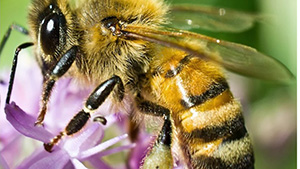
Bee balm tends to bloom as the berries reach the middle of their season, and it continues to thrive until the first hard frost. Elderberry and goldenrod also fit into this group, and additional fall-blooming varieties include asters and sunflowers. You can always incorporate annuals along with herbs, fruits, and vegetables into your bee garden, but perennials make a great base to design around.
Many different types of gardens attract and support struggling bee populations, but focusing on perennials is a great place to start. With some advance planning, you can coordinate your plantings to bloom from late winter through the spring, summer, and fall so that these essential pollinators have plenty of nutrition available throughout their entire active season. Designing your garden with a succession of bee-friendly perennial blooms will both help these vital insects thrive and give you a gorgeous space to enjoy month after month.
A plant known as the Bee Balm plant, as its fragrant flowers attract honey bees, butterflies, hummingbirds, and other pollinating insects, has a long history of medicinal uses by American Eclectic physicians, Native American tribes, and herbalists.
Bee Balm: How To Grow And Care For Monarda
Flower Fragrances that attract bees and butterflies to your garden
More Info on creating a Wildlife Sanctuary even in the Winter Time
Bees are dying at an alarming rate worldwide
If bees vanished, what consequences might follow?
Bees pollinate about 70 of the 100 crop species that feed 90% of the world population (animals and humans alike). Put: Without bees, the food supply would collapse, eventually. Bees are essential for effective pollination. A severe worldwide hunger crisis would be unavoidable.
What is CCD (Colony Collapse Disorder)?
What does CCD look like? CDD appears to affect the central nervous system of the bee. The adult bees seem to lose the ability to navigate. They leave their hive and never find their way back home. The queen and a small population of bees stay in the hive to do housekeeping tasks. However, without the workers who swarm out every day to bring food, the colony is doomed. The colony will eventually collapse and disappear.
What causes CCD?
Several factors are suspected to be affecting the honeybee population. However, the specific cause is a mystery. However, suspected causes are:
- chemical contamination of the food (including nicotine-based insecticides)
- lack of genetic diversity (it seems to affect only the European honeybee, Apis mellifera)
- poor nutrition
- parasites (mites)
- fungus infection
- genetically modified plants
- climate change
How severe is CCD?
It depends on the location; however, a loss of 30 – 45% of the bee population during the winter months is not a rare event. Last winter, the average beekeeper in Germany lost 20-30% of his bees due to CCD. In locales such as Berlin and Hamburg, upwards of fifty percent did not succeed.
What can we do?
The solution is very complicated and complex. Banning the use of a specific class of pesticides alone will not be sufficient, but the EU banned outdoor use for three of the major neonicotinoids – clothianidin, imidacloprid, and thiamethoxam – starting in 2018 to protect bees and other pollinators. Use is only permitted in closed greenhouses where pollinators cannot reach the chemicals. While many countries have banned the use, the US Environmental Protection Agency (EPA) and Canada still permit the widespread use of the chemicals.
There is also growing evidence that the use of fungicides may affect the bee population. Farmers try to avoid spraying pesticides when pollinating bees are present. No one has considered protective measures when using fungicides until this point. Chemicals present another issue: Pesticide drift to neighboring plants occurs despite careful agricultural spraying.
Please share this with your family and friends!!








Leave a comment